Recent Projects
In 2014 I carried out over 65 projects for clients from the UK, Ireland, Australia, New Zealand, USA, Canada, Argentina, the Netherlands and Spain. These ranged from simple requests for a couple of hours' work at The National Archives, to large-scale projects developing pedigrees going back many generations. I also carried out several projects involving in-depth research into a particular individual or historical event. Some of my clients were pursuing academic research or writing a book, some wanted the work done as a surprise present to mark a significant birthday, others wanted me to help them push their own research forward a little. In all cases I have derived much satisfaction from the positive feedback I have received from my clients regarding my professionalism, enthusiasm and results. I was particularly delighted to help several people establish the proof they needed to obtain the newly issued WW2 Arctic Star.
Researching a World War One soldier for Mr D
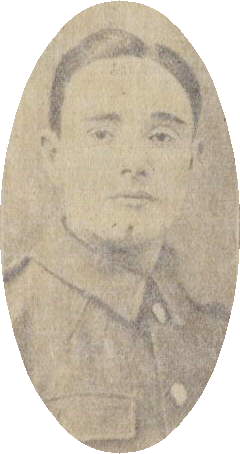
| Mr D, now in his 90's, was named after an uncle who died in the Great War. This was all that Mr D knew about him. Mr D's brother in New Zealand has his uncle's war medals, and so was able to give me his regiment and number. I was able to discover that he was killed at the Battle of Langemark, in 1917, and is remembered at the Tyne Cot memorial. His service records have not survived, but by accessing his unit's war diaries I was able to find out more about the battle. Unusually, the war diary names all the 'other ranks' who were killed or missing. Mr D's uncle was one of those listed as 'missing'. I researched the local paper for his home town and found the notice that his mother posted when she was notified that he was missing - some six months after the battle. His photograph was also published, and I was able to show it to Mr D and his brother. They were both very excited by this find, as they had never seen a photograph of their uncle before. 'We cannot thank you enough for your efforts to convert a name into a person whose short life came to such an abrupt end...' |
Researching military ancestors for Mrs H-S
This project started as a piece of research to discover more about the military career of Mrs H-S’s great grandfather, reputedly ‘drowned at sea’ on the way home from serving in India in the 1890’s. None of his military records survived, but I was able to ascertain that in fact he died and was buried in Malta. I also discovered that his father had been in the East India Army, and by working my way through army pay lists and muster books at The National Archives, I traced his career from enlistment at age 16 to retirement in 1851. One of the things Mrs H-S found of most interest was the amount of information contained in the soldiers’ records – even down to a description of their tattoos. It is these little personal details that so often help bring family history alive.
Researching a family legend for Mr S
Mr S wanted to find out more about his family, who moved from Hundon in Suffolk to Middlesbrough in the mid nineteenth century. Legend had it that the family had some connection with the manor of Stradishall, and had previously had a different surname. Through research at Suffolk Records Office I was able to trace back seven generations and discovered that the family had sometimes been called 'Halls' - a name with a possible manorial connection. I also found Mr S's surname in manor court rolls of the late 1500's, but could not convincingly bridge the gap between then and the 1750's. However, Mr S was fascinated by the amount of detail that I had uncovered, including entries in the Charity School register of the 1770's. An unexpected spin-off from this project was that as a result of my research Mr S's father made contact with some long lost cousins and spoke to an old friend he had lost touch with many years ago. 'One of the nicest things that's happened to me in ages' was his comment. |  |
Uncovering family secrets in Bermondsey for Ms Y
This project is ‘work in progress’. Ms Y wanted to find out more about her family, who were dock workers and wine coopers in Bermondsey in the mid nineteenth century. I discovered that her great grandmother had married three times – husbands one and three were brothers (which would have been illegal!), and she was living with husband three for many years before husband two died. I am currently on the trail of the brothers’ father who is proving somewhat elusive. Despite having a very unusual surname, I am having difficulty tracing his baptism in 1814 – because the only information I have is that he was born in London, Middlesex. One of the challenges of researching London ancestors is that there can be a huge amount of parish registers to investigate before obtaining a result. Ms Y is also keen to find out whether she is directly descended from a Londoner of the same surname who was hung in 1725 for absconding from transportation.
My own family history
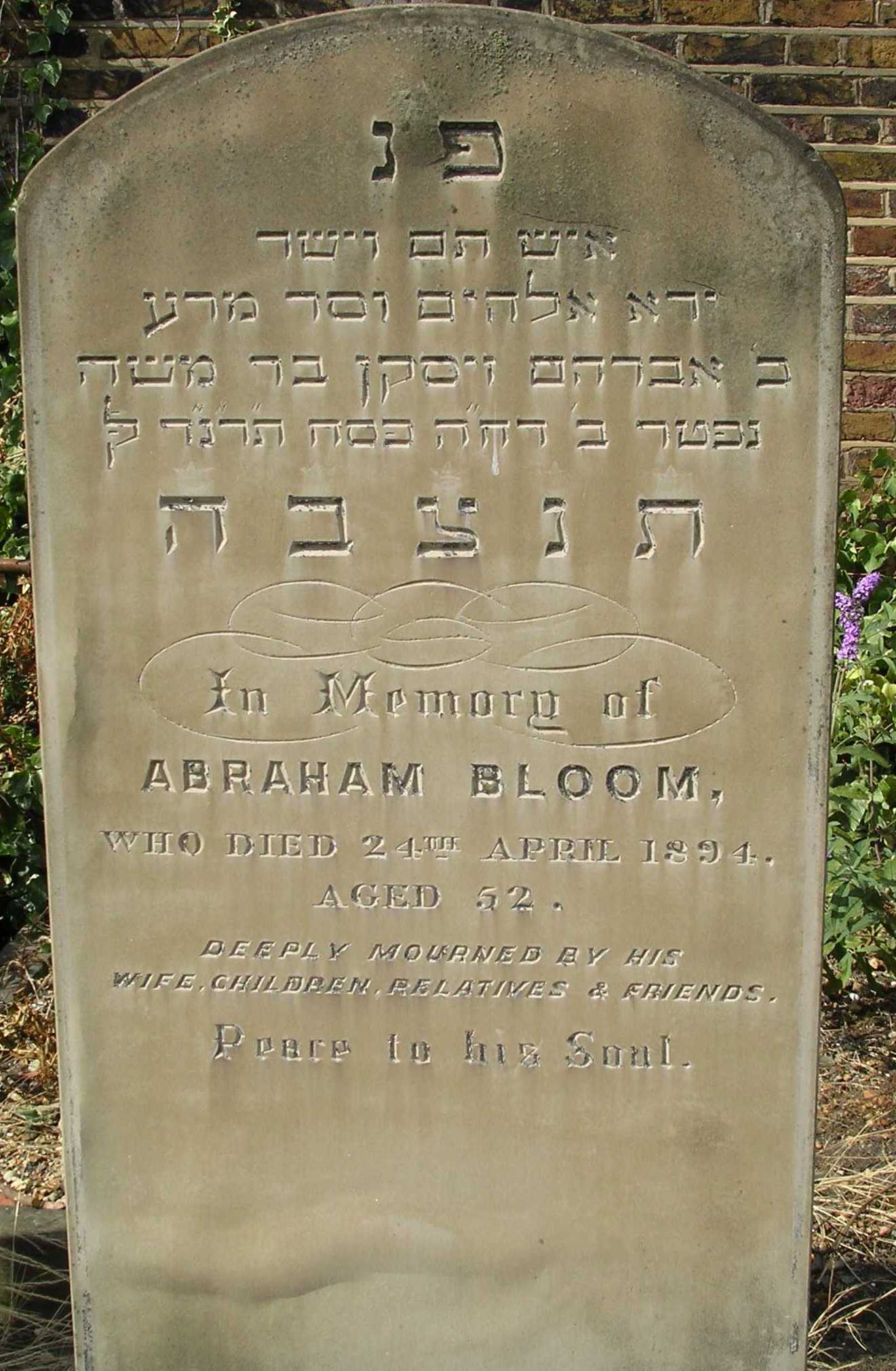 | This is an ongoing project. I started out in January 2000 wanting to find out more about my paternal grandfather's Jewish roots. Through painstaking research in the censuses of the East End of London I discovered that the family had originally been called Navloski, and arrived in the UK in the late 1860's from Poland - facts hitherto unknown to the rest of the Bloom descendants. I have built up a family tree of all of the descendants of these original Blooms, and made contact with many of them both in England and in the USA and Canada. I have not yet been able to identify whereabouts in Poland we came from - this is my current challenge for this branch of the family. My mother's family came from Ireland, and I have traced the family back using records at the National Archives of Ireland in Dublin and the Irish General Registration Office in Roscommon. To go further I will need to visit the Public Record Office of Northern Ireland - a trip I intend to make when I have time. |
Some of my paternal grandmother's ancestors came from Bristol via Devon; I have traced this branch of the family back to the early 1700’s. On the way I have discovered ancestors who were sent to debtor’s gaol, ran pubs, were governors of the workhouse, were paupers, and were – like so many of our ancestors – agricultural labourers. Some emigrated to South Africa (as part of the original ‘1820 settlers’ sent there by the parish), some later went to Australia. I have traced descendants of these foreign branches, and am now in contact with distant cousins in England, Australia and Canada who share an interest in the family history, and have their own contributions to add.